
Meet Me
“Hake, like cake.”
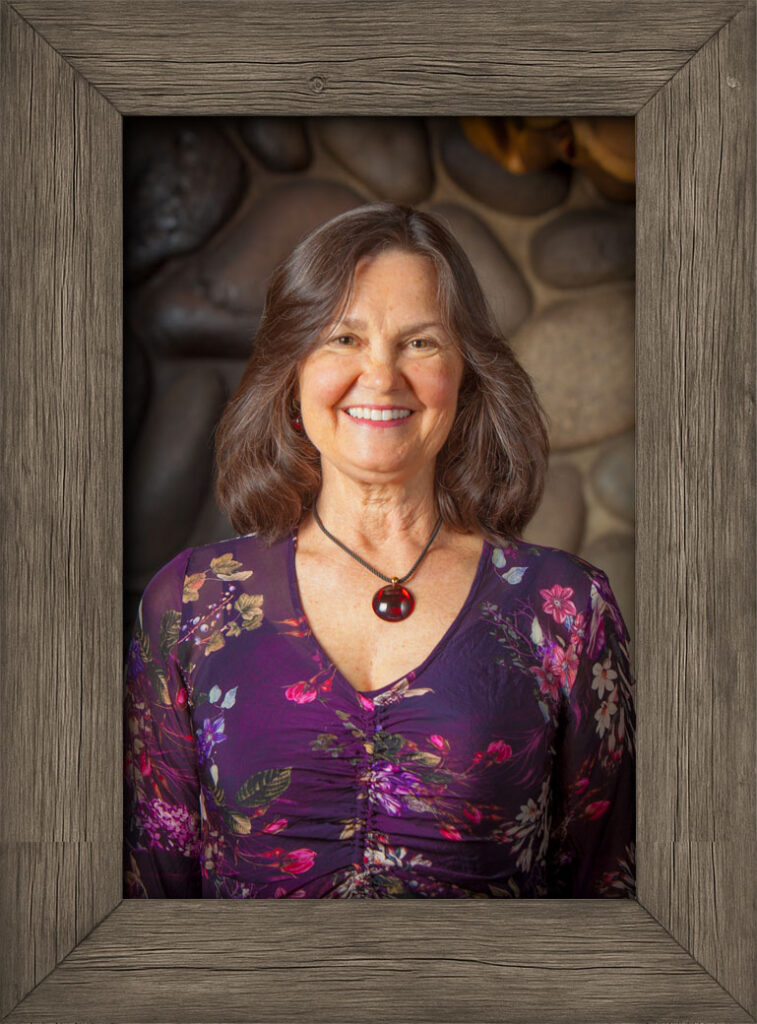
I’m Dr. Lisa Hake, a board-certified psychiatrist. My name is pronounced “Hake, like cake”— simple once you know, but often misread. I like to start there. It makes introductions easier.
My path to psychiatry has not been conventional, and that path shapes the physician I am today.
Medicine came first.
I began my career as an ophthalmologist after graduating from Stanford University School of Medicine. I practiced medicine and surgery for many years, including serving as Assistant Chief of Ophthalmology at Kaiser Permanente. I also chaired an ethics committee and pursued additional study in bioethics.
Those years taught me a great deal about medicine: how to make difficult decisions, how physical illness changes people’s lives, and how much trust is involved when someone places their health in your hands.
But I became increasingly interested in another set of questions.
How do people make sense of what happens to them? Why do some patterns repeat? How do relationships, personality, experience, biology, and circumstance come together to shape who we become? And what actually helps people change?
Eventually those questions led me back into training.
Psychiatry became my second chapter.
I completed my psychiatry residency at the University of New Mexico, where I served as Chief Resident of Psychotherapy.
I then completed a two-year fellowship in Integrative Medicine through the Andrew Weil Center for Integrative Medicine at the University of Arizona, broadening my training beyond conventional psychiatric treatment to include the relationships among mental health, physical health, lifestyle, and mind-body approaches.
Since then, my work has included caring for people with serious mental illness, complex psychiatric diagnoses, brain injury, dementia and other neurocognitive disorders, medical complexity, and the challenges that can accompany aging.
I served as Director of Psychiatry for a 108-bed residential care facility, working closely with patients, families, nurses, therapists, primary care clinicians, and other members of the healthcare team. That work gave me extensive experience caring for people whose psychiatric needs often intersected with neurological illness, cognitive change, and complex medical conditions.
I later provided inpatient psychiatric care at the OHSU Hillsboro Medical Center Center for Geriatric Psychiatry, working specifically with older adults experiencing complex psychiatric, medical, and cognitive conditions.

“There is only one cardinal rule: One must always listen to the patient.”
-Oliver Sacks
I am also a psychotherapist.
Psychotherapy has been central to my psychiatric training from the beginning.
Over the years, I have trained in approaches including Motivational Interviewing, Cognitive
Behavioral Therapy, Mentalization-Based Therapy, Dialectical Behavior Therapy, Acceptance and Commitment Therapy, Internal Family Systems, Exposure and Response Prevention, Positive Psychology, and experiential and mind-body approaches.
I have also pursued training in attachment, personality, and interpersonal patterns, including the Adult Attachment Interview.
You don’t need to know which of these approaches you need. Part of my job is helping us figure that out together.
What matters is having enough ways of understanding people that we aren’t forced to make the person fit the treatment.
How I Think About People
I am endlessly curious about what makes each of us who we are.
I pay attention to biology and symptoms, but also to personality, attachment, relationships, life experience, patterns of attention and emotion, physical health, strengths, values, and the ways we have learned to protect ourselves.
Diagnosis matters. So does everything a diagnosis cannot tell me about you.
When we work together, I want to understand not only what is happening, but what it is like to be you experiencing it.
That requires presence, attention, curiosity, and time. It also requires a relationship in which you can tell me when I’ve misunderstood something.
I believe some of the most useful moments in psychiatry begin there.
Still learning.
One thing has remained constant throughout my career: I love learning.
I continue to study medicine, psychotherapy, neuroscience, personality, attachment, contemplative traditions, and the many ways human beings have tried to understand suffering, resilience, meaning, and change.
My personal mantra is simple:
Do good. Keep Learning. Have fun.
Outside of work, I live in Central Oregon with my husband and our two Cavalier King Charles Spaniels. I love being outdoors, especially around water, and enjoy music, jewelry making, and the particular beauty of the high desert.
Most of all, I remain grateful that people are willing to trust me with their stories.
I look forward to hearing yours.
Stanford University School of Medicine
Doctor of Medicine

Andrew Weil Center for Integrative Medicine
2-Year Fellowship in Integrative Psychiatry

Motivational Interviewing Network of Trainers
Certified MI Trainer

University of New Mexico School of Medicine
Residency in Psychiatry
American Board of Psychiatry and Neurology
Board Certified Adult Psychiatrist

Oregon Geriatrics Society
Participating Member
You’re Not Alone
Integrative Psychiatry for Adults in Oregon
Thoughtful, individualized psychiatric care provided through secure telehealth.
You don’t have to carry it all by yourself.